
Developers
August 25, 2026
Why Unified Business Communication Is The Future Of Customer Engagement
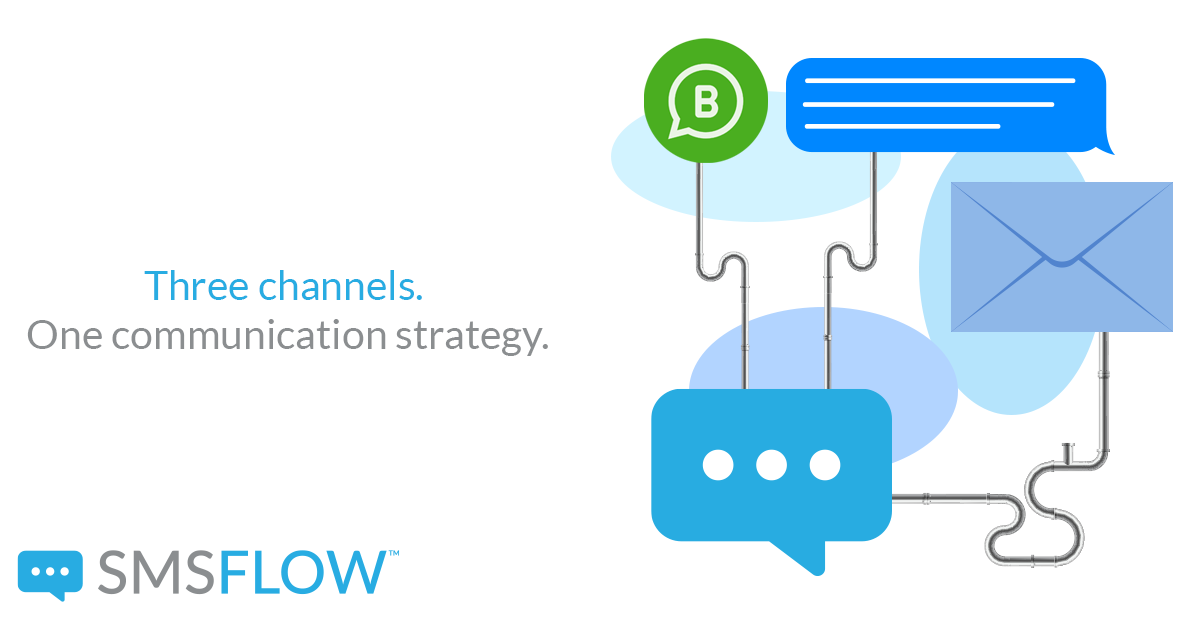
Why unified business communication is the future of customer engagement
To understand why unified business communication is the future of customer engagement, consider how quickly one interaction can change. A short notification may lead to a customer question, which may then develop into an exchange involving restricted information. One channel does not have to carry every part of that journey.
This shows why unified business communication is the future of customer engagement: the value does not come from adding more messaging tools. It comes from giving each channel a clear role and helping teams select the appropriate option as the interaction changes.
Customers experience one organisation
Inside a business, communication channels may belong to different teams, systems or budgets. Customers do not see that operating model. They experience one organisation and expect each interaction to make sense in light of the last.
Problems arise when channels are managed in isolation. A customer may receive an alert without a clear way to respond. A conversation may move elsewhere and lose its context. Employees may fall back on the most familiar channel, even when the information requires stronger controls.
A unified approach begins with the customer or business journey. It connects channel selection to the purpose of the interaction, the response required and the level of information risk involved.
More channels do not automatically create a strategy
Giving teams access to several communication tools may increase choice, but choice alone does not provide direction.
The goal is not to send the same message across every available channel. That can frustrate recipients, increase costs and make communication performance more difficult to understand.
Each channel should have a defined purpose. Teams should know when to use it, what information belongs there and what should happen if the interaction changes.
A unified communication strategy gives people a practical decision framework instead of leaving channel selection to habit.
Unified does not mean identical
Different communication channels provide value in different ways.
Bulk SMS for direct reach
Bulk SMS is suited to concise communication that needs to reach people directly. Alerts, reminders, confirmations, one-time PINs and service updates are common examples.
The value lies in straightforward reach. The recipient may only need to receive the information and understand what to do next.
WhatsApp Business Messaging for customer engagement
WhatsApp Business Messaging supports richer, two-way interactions.
It can help businesses continue sales enquiries, provide customer support, share updates and manage service conversations in an environment where the recipient can respond.
Secure Enterprise Messaging for stronger control
Some business exchanges require greater control over participant identity, information access and administrative oversight.
Secure Enterprise Messaging provides a dedicated environment for communication such as cybersecurity incident coordination, confidential client matters, restricted executive discussions and sensitive employee cases.
These channels do not need to perform the same role. The benefit comes from knowing where each one fits.
Start with what the interaction requires
Before selecting a channel, consider the communication need rather than the tool that is easiest to reach.
Useful questions include:
- What must the message achieve?
- How quickly must the recipient receive or act on it?
- Is a response required?
- How complex could the interaction become?
- Who should be able to participate?
- What could happen if the information reached the wrong person?
- Which consent, identity, access, retention or audit controls apply?
The answers can help distinguish a straightforward notification from a customer conversation or an exchange requiring stronger protection.
The handover between channels matters
A customer journey may involve more than one communication channel.
An appointment reminder could be delivered through Bulk SMS. If the recipient needs to reschedule or ask a detailed question, the interaction could continue through an approved WhatsApp Business Messaging process.
If a business exchange later involves restricted information or requires stronger participant controls, the organisation may need a defined process for moving it into Secure Enterprise Messaging.
This does not mean every interaction must move through all three channels. It means employees should understand what to do when the purpose or risk of a conversation changes.
Clear handover processes also help prevent customers from being asked to restart the conversation without context.
Governance makes the portfolio coherent
Unified business communication is not only a customer-experience or marketing project. IT, security, privacy, legal, operations and records teams may also need to contribute.
A practical communication policy should define:
- Approved uses for each channel
- Consent and opt-out requirements
- Identity and access rules
- Escalation processes
- Information-retention responsibilities
- Administrative and audit requirements
- Ownership of templates, workflows and integrations
- How delivery, response and resolution will be measured
NIST guidance on information exchange recommends applying protection that reflects the risk of the exchange. Within business messaging, this supports a model in which the channel and its controls reflect the information being handled.
Technology provides the communication options. Governance determines how they should be used.
How the SMSFlow portfolio fits together
SMSFlow brings three distinct business communication options together through one provider:
- Bulk SMS for concise, scalable reach
- WhatsApp Business Messaging for richer, two-way customer engagement
- YEO-powered Secure Enterprise Messaging for communication requiring stronger identity, access and oversight controls
Each solution is available independently. A business can start with the option it needs today and add another as its communication requirements evolve.
The value of the portfolio is not that every product behaves in the same way or that every interaction must pass through one interface. It is that organisations can work with one provider while giving each communication channel a clearly defined role.
One provider can support a clearer strategy
Managing communication requirements through one provider can help a business consider its options as part of a broader strategy rather than as unrelated product decisions.
SMSFlow can help organisations assess whether an interaction requires direct reach, richer customer engagement or stronger communication controls.
This creates room for a more deliberate approach without forcing a business to adopt every solution.
Begin with one customer or business journey
An organisation does not need to redesign every communication process at once.
A practical starting point is to select one important journey and identify:
- Which messages are currently sent
- What each message needs to achieve
- Whether the recipient needs to respond
- Where the interaction could become more complex
- Which information requires stronger protection
- Who owns each stage of the process
- How success will be measured
The organisation can then assign an appropriate channel to each stage and define what should happen if the interaction changes.
Starting with one journey makes it easier to test the approach, identify gaps and improve the process before applying it more widely.
The future is coordinated communication
Customers and employees will continue to use different channels for different moments. A unified communication strategy does not remove those differences. It makes them intentional.
By aligning Bulk SMS, WhatsApp Business Messaging and Secure Enterprise Messaging with the purpose and risk of each interaction, organisations can create a more coherent communication experience while giving higher-control exchanges a defined place.
Book a demo to explore how the SMSFlow communication portfolio could support your customer and business messaging strategy.
Recent Posts
Aug. 11, 2026
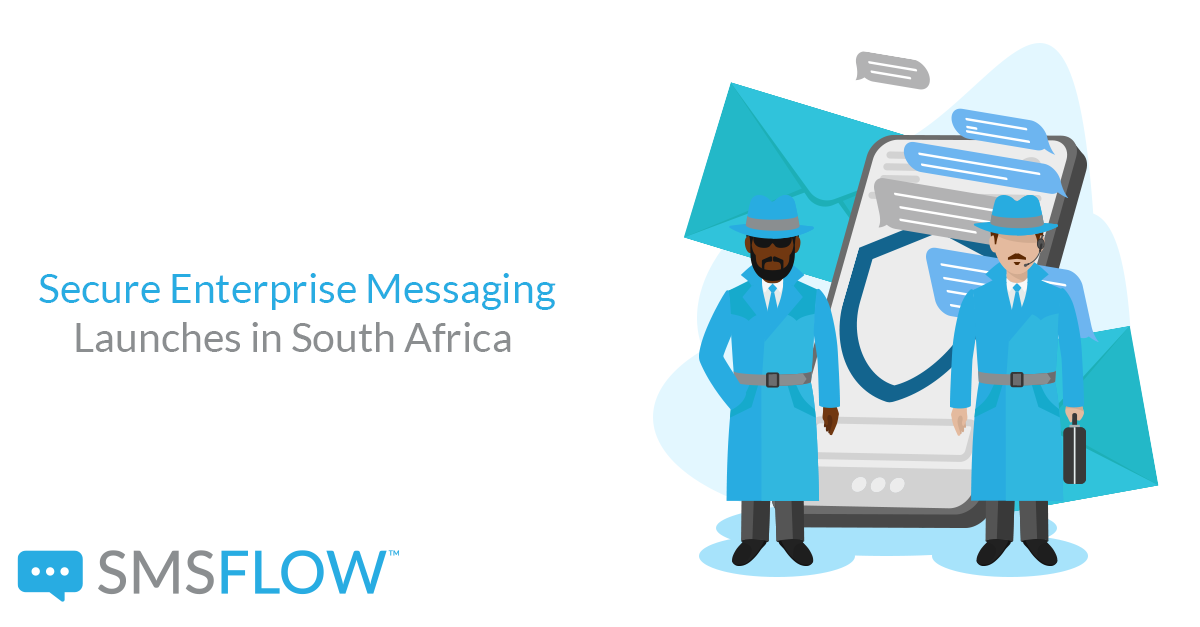
SMSFlow Launches Secure Enterprise Messaging In South Africa

Jul. 15, 2026
Cheap SMS for businesses in South Africa

Jul. 02, 2026
Affordable bulk SMS in South Africa without compromising reliability
Jun. 29, 2026
Why small and medium-sized enterprises need a simple SMS Portal – South Africa
Jun. 26, 2026
Introducing a simpler SMS portal for South African businesses
Jun. 18, 2026
Sending SMS with Java using the SMSFlow API

May. 18, 2026
Sending SMS with SMSFlow using C#

Apr. 23, 2026
How to build an AI WhatsApp bot for your business

Apr. 14, 2026
How AI Chatbots can automate customer conversations on WhatsApp
Mar. 27, 2026
Why use WhatsApp for Business?
Unlock the potential of Bulk SMS
Be the master of your bulk SMS strategy with our tactical Playbook to drive repeat purchases and sales.Try it for free